How our inner critic trips us up (even after all these years)
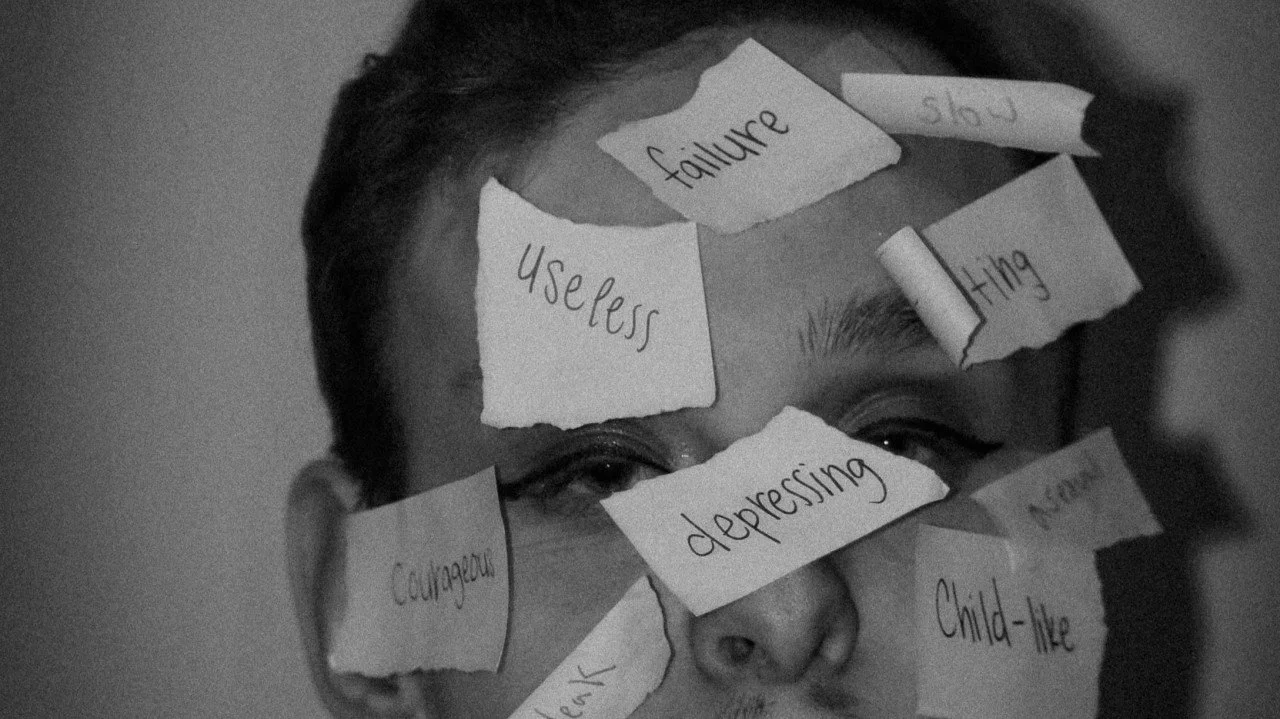
Before we start talking about the inner critic that seems to be lodged inside so many of us, it feels right to discuss internal speech in general. I mean, why is it there, this incessant chatter that for ADHDers tends to consume our mind most of the time.
Inner speech is part of our thinking, planning, decision making, and even our emotion regulation. Inner speech and our prefrontal cortex (where we do our rational thinking) interact together. When you speak to yourself, it helps you structure your thoughts in words in your mind. The prefrontal cortex becomes more active during internal speech, and as it regulates behaviour, attention, impulse control, and is important in emotion regulation, it is easy to see that inner speech is an important part of our functioning.
It is rooted in childhood and over time develops into an automatic thinking mechanism. It supports self-awareness and developing a sense of self-identity. It helps you to control negative thoughts and to develop positive self-talk. Think of yourself telling yourself before an exam, “come on, it is just an exam. No need to be nervous.” Doing so helps you to regulate emotional reactions by suppressing amygdala activity (the amygdala continually cans for danger), and so your inner speech can help manage anxiety, anger, and stress.
“So why is mine doing the opposite?” you may well ask. After all, your inner voice tells you that you are never good enough. That, no matter how successful you are, it is not genuine, and people ‘will find out at some point.’ Imposter syndrome is real and it is your inner voice that is screaming at you. You only truly know you have done well at something when someone else tells you so. You do not trust yourself to know that what you did was good. You immediately think you have done something wrong when someone asks ‘whether they can have a word with you.’ I recognise it all and once all of that was me.
Your inner voice is formed by internalising external speech, starting in childhood. If you had a childhood where you were told off, or where emotional episodes happened around you, or you did not get any attention, or your peers did not want to play with you…. Recognise any of those? Those voices were the start of your inner critic. If you were humiliated or criticised, you likely developed a rigid internal voice. But why, you may question. Because it is what kept you safe at the time. That part of you, that kept you safe then, has not been able to develop into an adult. It is still trying to keep you safe in the only way it knows how - by criticising you. It has become your inner critic. And as us ADHDers are extremely sensitive to criticism, it leads us to give a stronger emotional link to that negativ voice. It undermines your self-confidence, makes you feel guilt and helplessness, and makes you struggle when in challenging situations.
When you listen to your inner critic, do you recognise its voice? Or are there more than one voice?
Critical thinking skills do not start to develop in a child until at least the age of 5. This means that the social interactions before that time are accepted as fact - never to be questioned. The criticisms from that early time deeply impact how we perceive ourselves. This is where imposter syndrome is born. Our internal dialogue is formed by those childhood experiences, cultural gender roles, and societal expectations, and by accepting those judgements as true, we find it easy to blame ourselves. We take on the role of ‘it is all our fault’ or ‘there is something very wrong with me.’
This also explains why we often react to our partners in an extreme way, when in reality the situation did not warrant it. We are not responding to them. We are responding to the other voice that we hear in their voice. And that other voice has a violent tone to it. We respond to that. Afterwards we question why we reacted that way. Afterwards we recognise that it was not warranted. But in the moment it feels real.
Obviously we do not want this internal critic to keep on at us as it does. It would be easy to try to tell it off, but we would do it a disservice. All it is trying to do is keep us safe. Nonviolent communication is one way in which we can lessen the violence in our inner voices, and how we can cultivate empathy and compassion to the voice and through it, to us. If we can respond to the grievances of the inner critic from a step back, as if they were a different person and we were listening to them, it makes it easier to observe the voice without judgement and to focus on whatever unmet need it is dealing with.
By externalising our inner speech (and dialogue between different voices), we can separate out our own internal voice from that of the other voices, which may be representatives of family members, old teachers, imagined friends, etc. Nonviolent communication has four steps. The first one is observation - observing your inner dialogue as if you were watching other people talk to each other. The second part is feelings - articulating what you feel, which in itself can help you get in touch with what you need. The third is needs - you may never have learned what your needs are. This is where the feelings are important as noticing the body’s responses to emotions can lead to greater awareness of those needs. The fourth step is to make a request to yourself to have that need met. That is what a boundary is. Boundaries are best when they reflect a personal value, are concrete and you are able to act on them, and they are grounded in self love and accepting yourself as you are. And importantly, boundaries are about you. Not about anyone else.
Another way to engage the inner critic so as to weaken its voice, is Internal Family Systems (IFS), where the voices are seen to be parts of you that were forced into taking on extreme roles that they were never supposed to have. They are exhausted but keep battling on to keep you safe, which is why anger towards them feels very wrong. They are doing their best. They need understanding, compassion, and gratitude. Ask it questions. Discuss reasons why they are doing what they are. What is it they need to be able to let go of the role? What you want to do is to create a new relationship with them. This may be done on paper with you taking on the role of scribe for both the inner critic and the rational voice.
In my twenties I started to practice forms of mediation. Never one form for very long, but between many different forms, a sort of habit was produced of being mindful. Meditation is about the inward journey to explore how you think, how you feel, how you are. Mindfulness meditation is about observations. It is ‘the art of remembering to live in the present.’ It is that practice that provides us with physical and psychological benefits. The way I have tried to describe it to people is that meditation and mindfulness has formed structures in my mind where it was only chaos. And that this has helped with focus, with keeping my emotions stable, and with keeping a positive mindset. The last does not mean that I don’t feel negative emotions, but my natural inclination is to find a way forward.
Research has been done that shows the structural changes that mindfulness meditation makes to the anterior cingulate cortex, the temporal lobe, the hippocampus, the amygdala etc. The effect is a greater body awareness, attention regulation (bloody helpful when you are ADHD), and a better self perspective.
Yet another method to improve that inner speech and quieten that inner critic is creativity. This is one that I work a lot with myself and that I am bringing into the supervision I am developing. For an explanation here, we need to go into some brain science. The ability to create novel ideas (and so be creative) is related to the brain’s ability to reform and reorganise synaptic connections. This means that creativity is linked to synaptic plasticity, the ability to change how your brain cells are connected. A whole series of networks in our brain is active during creativity (read dance, painting, music, any creative arts).
While this is going on, the amygdala becomes more active. Remember that the amygdala continually scans for danger cues that, when present, would send us into survival mode. When animals feel fear, they automatically react. When humans feel fear, they have more of a choice. They can determine that the fear is irrational. There seem to be two ‘roads’ they can follow for this. The low road, with high amygdala activity, works through adaptive emotional processing. This means the emotion gets processed and dealt with. The other road, the high road, uses the prefrontal cortex with less amygdala activity, and tends to work more towards suppressing the emotions. As creativity increases amygdala activity, it fosters the processing of emotions, and in this way can aid recovery.
A last method, that I received through my shamanic practice training, is that of talking to a tree. To do so, walk around until you find a tree that feels ‘right.’ Walk to underneath where the canopy ends and ask the tree for permission to come closer and talk to it. When the tree seems to slightly pull you forward, it has given its go ahead. Walk to the trunk and place your hands and your forehead on the bark. Feel the way the energy flows through the tree. Ask your question, and give it time and space to answer. Once you have received your answer, thank the tree and give it an offering. If you have nothing with you that is suitable, pluck a single hair and give it this.
Warm wishes,