Good intentions can be great, but without listening to the people themselves and their hopes and wishes, while taking into consideration their skill level, this type of act of benevolence is doomed to fail.
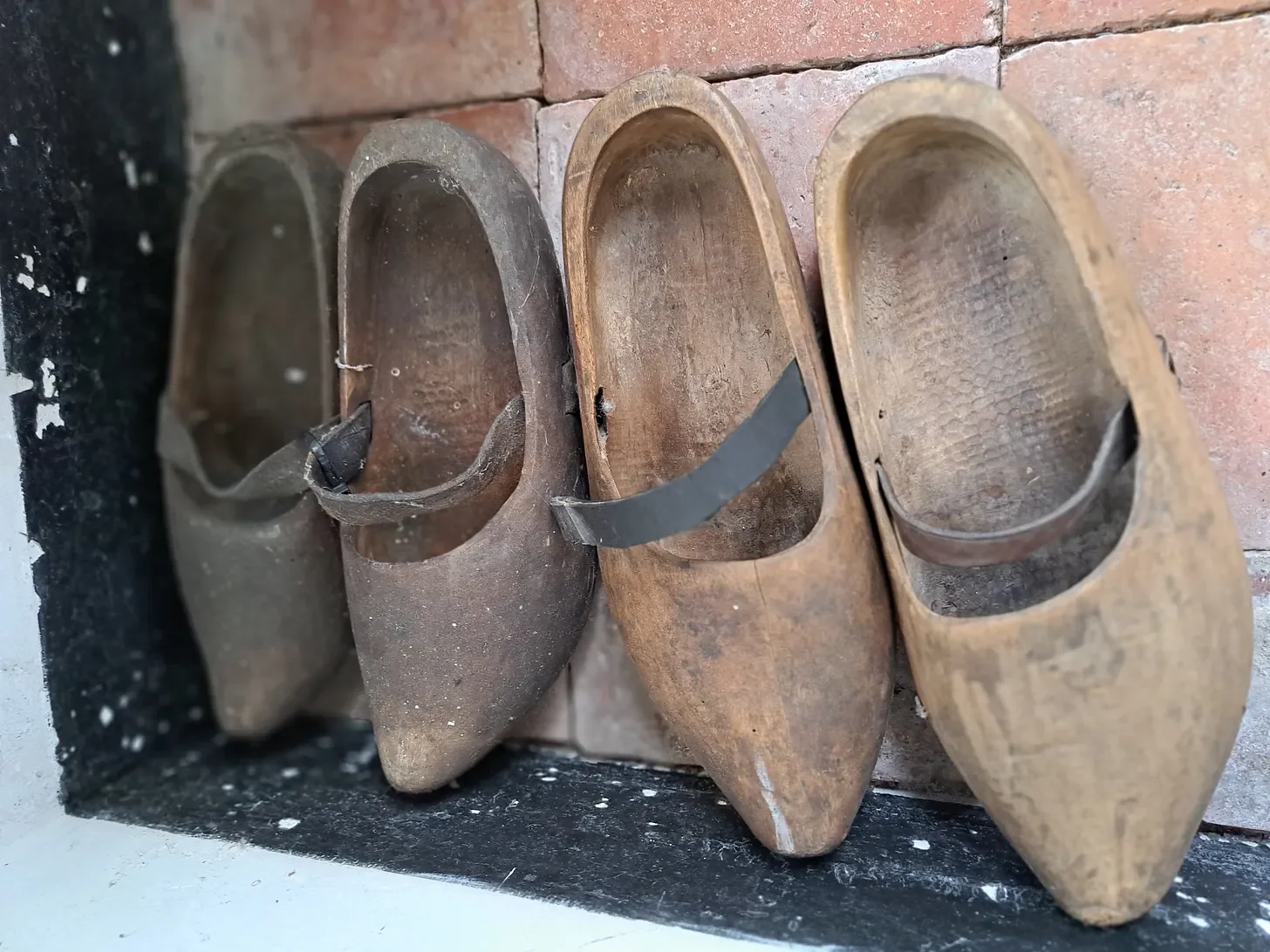
When I stayed in the Netherlands with my family for a while, I used to go for walks with one of my sisters, and one of the walks went past Frederiksoord, which appeared to be some sort of museum. When asked, I was told it was one of the colonies. That still did not mean anything to me and so I googled it later. Goodness me, what fascinating history the Netherlands holds that I am completely oblivious to.
In the early 19th century poverty was rife in the Netherlands. General Johannes van den Bosch came up with an innovative solution and, backed by King William I, he put his idea into practice. He proposed that, instead of giving aid to those who needed it, instead they would be given the very practical support to carve out a new life for themselves. Inner city families were offered the opportunity to move to Drenthe (the province I grew up in) and be given a small house and a plot of land to support themselves through agriculture.
The concept was brilliant, with shades of E.F. Schumacher’s ‘Small is Beautiful: A Study Of Economics As If People Mattered’ which came out in 1973 and therefore may well have been influenced by the ideas brought forward through this project. Schumacher took the concept a step further by taking into consideration not only human needs but also their limitations. More on why that is important a bit later.
A few years ago (in truth it could be anywhere between 5 and 10 years - my ADHD brain won’t go more exact) I moved to Wales to join a small intentional community with a similar aim of being self-sufficient, growing my own vegetables and living simply. It failed. I failed. And I learned. Self-sufficiency is hard. It takes so much physical, mental, and emotional energy that you have to be prepared for it to work.
The colony took inner city people with no education or skills in agriculture and expected them to manage. The landscape was carefully arranged with roads, workshops, schools, and institutions. A social experiment designed to reshape people’s lives by undoing poverty and changing behaviour. As we all know, changing behaviour needs more than giving options. It needs education. Mindsets need changing. All of this needs support. Finland tried a similar social experiment when it provided a basic income to unemployed people - an unconditional income that would not change if they found work. Interestingly there was no difference between this group and the control group in numbers of people that found jobs, but there was a marked difference in how happy they felt. Depending how you look at it, the Finnish experiment was either a success or a failure.
In the colony the 52 small farms did not produce enough income, partly due to the fact that the land was not particularly fertile (which was why it was cheap) This made the organisation change how they ran the colony and they started housing other groups, including homeless, orphans, and beggars. This turned it from a social reform experiment into one full of discipline and social control. It was not all bad. The people received free medical care and there was compulsory schooling for the children. In fact, these agricultural colonies can be seen as the foundation for the welfare reforms 80 years on. In total 17,000 people lived in 3 of these colonies. Two of them in the Netherlands and one in Belgium. An astonishing one million Dutch people may have had ancestors living there. The Frederiksoord colony became a UNESCO World Heritage Site in 2021.
Taking inner city people and placing them in a very Calvinistic, very rule-driven community where moral fortitude was the aim, turned out not to be that easy. And as a result different colonies were set up for those who broke the rules, where they joined the beggars, orphans, and the previously homeless, all of whom were seen as being in great need of discipline and correction. For the free colonies the aim was to be self-sufficient through their own plot of land and work extra on communal land, or earn extra money by spinning or weaving, and use that money to pay back the grant. After that the family could leave, being re-educated and skilled in agriculture. In other words, the experiment was to turn so-called asocial inner city folk into law-abiding hard-working citizens. In a similar way people from London slums were sent to Sussex where they were given social housing.
Many of the colonists came from families where no one had worked for generations and who liked their drink. It turned out to be harder than expected to turn them into sober hard-working people. The ‘correction colonies’ grew large. In them people were made to work hard in the belief that hard work was healthy and, of course, that their stay did not cost more than they earned through their work. More and more people were sent who did not choose to come, turning the ideas of social reform into punishment.
The idea that you could take any paupers, itinerant, and alcoholics, whisk them away to the other side of the country where they landed in a totally different culture, was extremely naive. Not even considering that these people had their own culture and their own way of living that they may have been perfectly happy with, was unrealistic. The idea of educating and teaching skills was good. In many cases it would have been much better to provide this where they already lived and had their own support system. What they needed were jobs or ways to get jobs. Most did not ask to be guinea pigs. They were not given the option.
As any good coach (and clearly E.F. Schumacher too) knows, you start with the people. With their dreams and wishes. With their skills. You listen. You learn. And only then do you come up with ideas for support, which you offer them and get feedback on.
If you enjoy these types of posts, do let me know.
Warm wishes,