The little Mermaid
The fairytale of the little mermaid tells the story of wanting to be different or rather of not wanting to be different - wanting to be like everyone else. The little mermaid desperately wants a human life, even if it causes continual pain and it means she has no voice.
Does this sound familiar?
What are societal expectations?
I grew up in the Netherlands, a very densely populated country contrary to what many people seem to imagine. No, it is no longer clogs, windmills, and fields. Instead it feels like a country in miniature, condensed into a much smaller space than it should be. Inevitably this causes issues. There are environmental issues, like too much nitrogen in the soil, or like there not being enough space for the wolf packs that have immigrated to the Netherlands and who therefore attack and kill sheep.
There are also societal issues. Dutch culture is full of societal rules, ways in which, when the rules are followed, people can live together without too much difficulty. Any society that lives close together ends up having rules. If you don’t want to conform to the rules, you have to go live somewhere quiet without neighbours. This means that even though the outside view of Dutch society is that it is very liberal and free, the reality when you live there is that there are a lot of rules to follow.
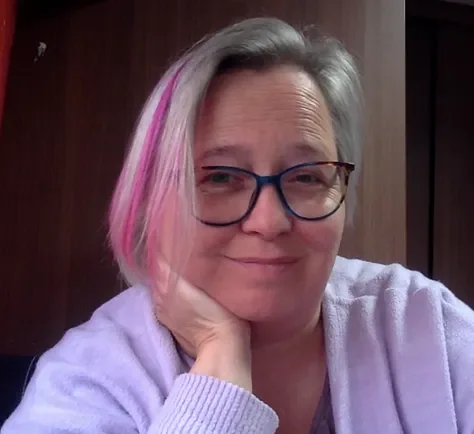


Photos of me at various stages of life
Society expects us to do things a certain way. It depends on all of us to start school at a certain age and to transition to work at a certain age. It expects us all to follow the same steps in the same way. The exact societal expectations depend on the culture we grow up in, its shared beliefs, norms, and standards. This is no problem when we instinctively have those same beliefs, when we have those same thoughts, when we experience life in the same way. But many of us don’t. We are like the little mermaid looking at the humans, and wondering why we are not like that.
This dissonance between what is expected of us and what we would naturally do causes us to try to be like others, to mask, to pretend. I left the Netherlands when I was in my early twenties and I tend to assume that the way I managed to keep who I truly am alive to a good degree to that fact. Any differences, any quirks, anything that others might find impolite or strange, was accredited to the fact that I was a foreigner. I was forgiven because I came from a different culture (and one that was ‘accepted’ in the countries where I lived). I did not have to mask too heavily.
Trying to be who we are not causes untold damage. It stops us believing in ourselves. It stops us from trusting our thoughts, our feelings, how we experience life. It causes anxiety, stress, and depression. It is exhausting. And for someone who fits into society, it is very hard to understand. Even now it is always a relief when I am ‘back home’ for a while, where I don’t have to wonder if what I said or did is considered odd or wrong. I can relax.
A few examples of how the neurodivergent experience this
When we are children we are expected to control our emotions, even if we have never learned to regulate them or even to understand what we feel. Our executive functioning skills development lags behind and this interferes with learning to regulate our emotions. Add to that the fact we often have parents who are undiagnosed ADHD and therefore never learned to regulate THEIR emotions and we have the perfect recipe for a huge delay in emotion regulation.
We are supposed to have lots of friends. Many of us ‘different’ people found it very difficult as a child to make friends. Many of us still find it hard to make friends. We get easily overwhelmed by all the stimuli when in a group environment, because of our extra sensitivity. The extrovert among us at least enjoy being in the midst of people, even if afterwards they need to de-stress. For the introvert (and I count myself as one of them) it doesn’t feel worth going out as we know it will be too much for us. My sound sensitivity means I have never been to a pop concert. The idea of a day out in London horrifies me as the assault of all the emotional baggage of the people around me that blasts against me is too much to bear. I used to try it, to mask, to distance myself from my body in order to not feel the sensations. But as Gabor Mate says: The body knows the score. I would be ill for a week afterwards.
Society tells us we need to have a career. We should know what we want to do, or at least make some sort of decision, in our early twenties, do a degree and start climbing that ladder. Once again, our executive functioning development lags behind. In our early twenties, that part of our brain is the equivalent of a 14 or 15 year old neurotypical child. We are not YET able to do these things. Our society makes us feel that we are stupid and incapable because we can’t do something we are not ready for yet. Most of us won’t have one career anyway. The ADHDer is a collector of skills and knowledge and will likely have several careers, keep them until they are good at them, by which point they get bored, and change careers.
How many of us feel guilty when we relax. We feel that we ‘should be productive’ all the time. This directly contravenes our need for play. Play releases dopamine. We need dopamine to initiate tasks. Ergo, play helps us to be more productive. Instead of going with that and building play into our days, we sit and feel guilty that we are not doing more.
We are supposed to easily be able to keep our houses clean and tidy. ADHDers tend to fall into two groups: They either are almost compulsively tidy as otherwise they can’t think as chaos outside means chaos inside, or they can’t manage to keep a place tidy and even though they like tidy places, it never quite stays that way. They blitz the place, are determined to keep it tidy as they like it, but a day, two days, or a week later, it is back to the way it was before the blitz. This discourages them from tidying or cleaning, and makes them feel guilt and shame. The easiest solution? Get a cleaning person in once a week. If you can’t afford that, see if you can find an extra job or role somewhere that pays just enough for that cleaning person. It is life changing as it keeps the chaos at bay. Once you are used to that, letting go of your guilt and shame becomes easier and you will probably find that you don’t mind it being untidy (as you know it won’t get out of hand).
Society tells us we should always be happy. Being miserable or sad is seen as not acceptable. We are told to ‘buck up’ or ‘it’s not that bad’ or ‘there is always a silver lining’ even when for us it feels like the world just ended. As a child and teenager I was know as the girl who always smiles. Did that mean I was happy? No! My teenage years were the most confusing and unhappy out of any part of my life. When your actual feelings are not validated, you stop noticing them. You stop knowing what you feel apart from this amorphous sense of something not being right.
Society expects our behaviour to reflect how we look and dress. I feel that this disproportionately affects the neurodivergent. Our extra sensitivity means that standard ‘office wear’ is uncomfortable to the point of distracting us from our work. If I can’t wear jeans in a job, I don’t know what to wear. Artificial fibres tend to make me itch and stop me being able to regulate my temperature. As we ARE different, we struggle with conformity. We may have tattoos or brightly coloured hair (right now I have some magenta pink woven through my hair). We may not understand or even see standard beauty. A friend of mine never understood how I cannot tell if someone is beautiful. The reason that I can’t is that for me beauty is in details: the way someone’s nose curls when they are happy, or the way they laugh, or the way they can’t help but kick a pile of leaves.
Society expects us to work during the day, not taking into consideration that some people have circadian rhythms that are different. I have always struggled with starting work early. It takes me two coffees and some time to switch my brain into work mode. Many of my clients work best in the evening and the middle of the night. It may be that this is because there are less distractions, but it may also be that this is because their circadian rhythm tells them that those hours are the ones to be awake. Did you know that in Shakespearian times they slept in two phases? They would come home from work, sleep for a few hours, wake up, have dinner and do bits and bobs, and then go back to sleep. I can’t help thinking that this would be perfect for me. Look up biphasic sleep patterns.
Then there is the preoccupation with time and being exactly on time. Most ADHDers are either always late as they can’t gauge how long it takes to get ready, or are always very early because they are super anxious about being late and cannot gauge how long it takes to get ready. Both are to do with having a time sense that is not linear. Our time seems to stretch and contract depending on what we are doing.
Burnout
All this trying to be who we are not has inevitably consequences. Burnout is considered to be a condition of extreme physical, emotional, and mental exhaustion caused by long term unmanaged stress. For most people that equates to working too hard in a job with too much pressure. For ADHDers it is much more than that. It is not only our work that is stressful. Every bit of our life is full of stress. Our homes are supposed to be a certain way. We are supposed to socialise a certain way. Go to bed a certain time. Work continually for a certain number of hours. Do the tasks without procrastinating. Do our household chores. Have quality time with our partners and our kids. Regulate our emotions. Keep calm. It is as if we work 24 hours a day, even when we sleep - if we sleep as insomnia often co-occurs with ADHD.
I love writing and I love people reading my writing. If you would like to read more of my writing, do subscribe.
What this means is that simply stopping work for a while and rethinking that part of life is not enough when it comes to ADHD burnout. If that is all we do, we may seem fine for a while, but then we burn out again and this time it is worse. We need to totally redesign our life. And that may take a few trials. In my case joining an intentional community was not the right path and neither was being a vanlifer. Right now I am trialling being a digital nomad which feels better but is still not quite right. None of these experiences mean that I made mistakes or failed at changing my life. They only signify that I am increasingly closer to finding what truly works for me and meanwhile I am a lot less stressed than I used to be, a lot less anxious too, AND I have had some amazing adventures on the way.
Warm wishes,