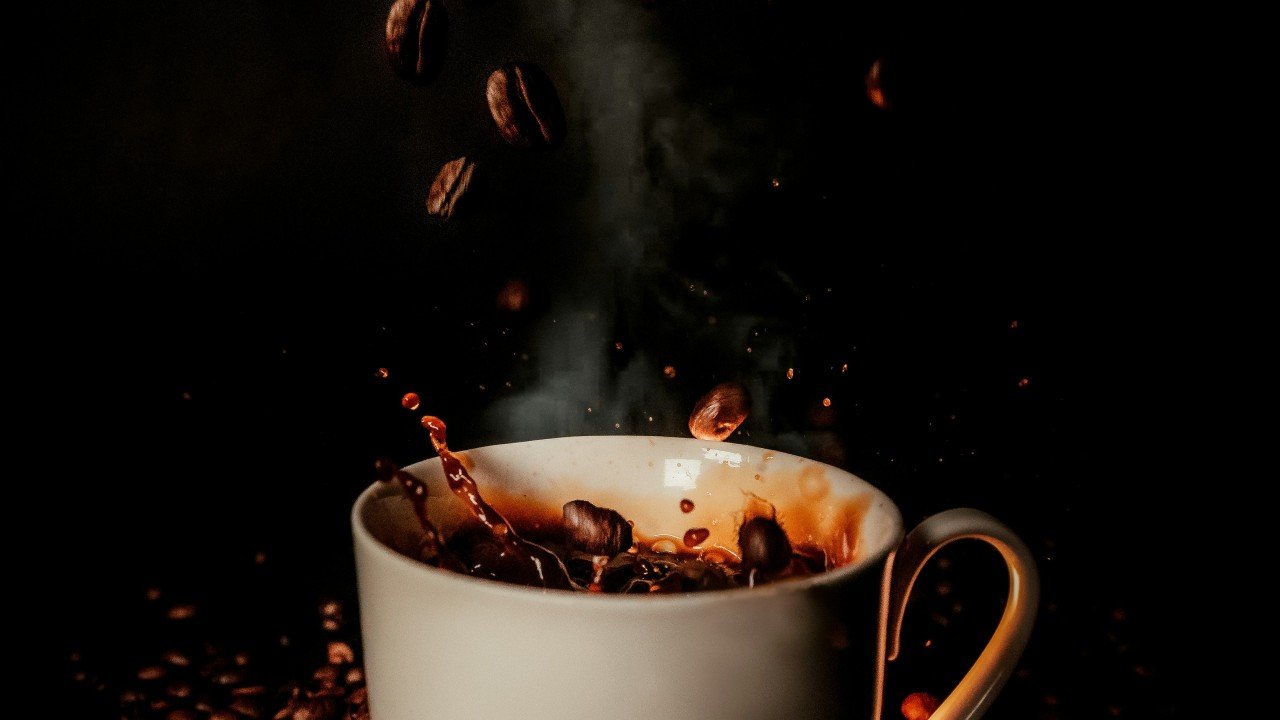
Coffee is one of the few things I drink, apart from water and, often, a glass of wine in the evening. I don’t drink soft drinks or herbal teas or black tea for that matter. Most of the day I drink water. At breakfast I drink coffee, which is a serious change from even a year ago, when I drank lots of coffee throughout the day. There is a reason for that one cup of coffee and I will get to it.
Did you know that coffee grows on trees? The coffee tree (or shrub) is one of those rare trees where all three seasons of growth are happening at the same time. At any one time you may see flowers, bright green cherries, and ripe purple cherries. You can imagine how difficult that makes the harvest by individually picking the ripe cherries. The actual coffee bean is inside the fruit. The tree can grow to a hundred years but the most productive time is between 7 and 20 years.
Coffee has only been drunk in Europe for a few hundred years. Venetian traders first came across the drink in the Middle East and brought the idea back to Venice, but it wasn’t until the Dutch traders came into play that the coffee market exploded. Coffee was grown and sold in Yemen, and the country tried to stop the spread of coffee by banning the export of live coffee plants. The Dutch sneaked away coffee plants from the town of Mocha in Yemen and brought them first to India and then to Indonesia to start the first coffee plantations. It only took a few years before the Dutch became the largest supplier of coffee to Europe.
It was therefore not surprising that I used to drink lots of coffee. I learned to drink it when I had my first part time job as a teenager and worked in a coffeeshop on Saturdays. Coffee was the only drink you could have for free during your breaks. I drank (and drink) it black as many Dutch people do. Usually we have a biscuit with it, but only one. It is after all a Calvinist country 🙂
At the time, and for a long time afterwards, I would have filter coffee, either through a filter machine or simply through a loose filter (with paper filter inside). This produces a light coffee without most of the oils and fine particles as they are caught by the filter. A cafetiere on the other hand allows the coffee to steep and allows oils and fine particles to stay in the coffee, which gives it that mouthy feel and heavier taste. It always feels to me like I am chewing coffee. Which is odd considering that I do like Turkish coffee, which is made by putting very fine coffee in a pot and bringing it to almost boiling point, letting it stand for a bit and pouring it out. You end up with half grounds and half coffee and have to be careful not to drink too hastily or you have a mouthful of grounds.
Anyway, I happily drank filter coffee for many years, carrying a filter with me when living the vanlife or when camping. I brought it to Italy with me, alongside a bag of paper filter bags, and when they ran out, tried to buy more. Alas, the supermarket did not sell them. I had to come up with another plan.
My neighbour introduced me to coffee from a Moka pot, the way that most Italians make their coffee, and instructed me carefully as to how much water and how much coffee, and never using less water or coffee. If I wanted less coffee, I should use a smaller Moka pot, and yes, you can get them from tiny for a small espresso sized cup (Italians use the word ‘caffè’ instead of espresso) to a huge one for the entire family. You know what, after taking a week or so to get used to it, I have been converted. What is more, I only need a single cup at breakfast. That is enough. Feels very odd and this winter I may have to come up with alternative warm drinks as cold water probably won’t do it.
I was convinced that Moka pot coffee was much stronger and it is indeed stronger in taste, but not in caffeine. That is roughly the same.
The highest amount of caffeine is in cold brew coffee (apparently called Dutch Coffee in Asia) which I had never even heard of. The concentration of caffeine is not that high in cold brew coffee (as it is diluted) but it is served in large mugs which gives it a large amount of caffeine. In terms of concentration of caffeine, espresso wins all the time.
I found some interesting articles on the health benefits of coffee. After hearing for years that it is unhealthy to drink coffee, I must admit I enjoyed reading them. Whether they are totally correct, I leave up to you to decide (they did appear on coffee blogs and sites).
Apparently coffee improves memory, cognition, and mood. I would definitely agree with this, which is why I need that cup of coffee in the morning! It is however also linked to reduced risk of anxiety and depression, and a reduced risk of dementia, due to anti-inflammatory compounds and caffeine. It also provides a reduced chance of heart disease, stroke, hypertension, and diabetes.
Coffee is said to be of benefit when doing physical activity like running and I do admit that I used to have a cup of coffee before running. I thought of it as a ritual. Maybe it was more than that. Any thoughts?
Lastly a few words about instant coffee. I honestly feel it needs an alternative name. When it only takes 5 minutes to make a Moka coffee, why make instant when boiling a kettle takes a similar amount of time? Did you know that most instant coffee is made from the Robusta coffee bean, which provides a strong and harsh flavour with high caffeine content? Most other coffee is made by Arabica coffee beans, which is aromatic, more nuanced and with a slightly sweeter feel to it than Robusta. So please, stop buying the processed instant coffee and do yourself a favour and buy a Moka pot!